
Uus teravilja puhasti Agrivel Grain Cleaner BSH-12


 Markkleeberg
Kui olete otsustanud osta madala hinnaga tehnikat, veenduge, et suhtlete tegeliku müüjaga. Uurige välja võimalikult palju infot tehnika omaniku kohta. Üks petmisviisidest on esineda tegelikult olemasoleva ettevõtte nime all. Kahtluste tekkimise korral teatage sellest meile tagasisidevormi kaudu, et saaksime asja täiendavalt kontrollida.
Enne ostu sooritamist uurige hoolikalt erinevaid müügipakkumisi, et selgitada välja teie poolt valitud tehnika mudeli keskmine hind. Kui teie valitud müügipakkumise hind on oluliselt madalam sarnaste pakkumiste hindadest, olge ettevaatlik. Suur hinnaerinevus võib viidata varjatud defektidele või müüja petmiskatsele.
Ärge ostke kaupa, mille hind erineb tunduvalt analoogse tehnika keskmisest hinnast.
Ärge nõustuge kahtlaste tagatis- ja ettemaksudega. Kahtluste korral ärge kartke täpsustada üksikasju, küsige müüdava tehnika lisafotosid ja dokumente, kontrollige dokumentide ehtsust, esitage lisaküsimusi.
See on kõige levinum petmise viis. Ebaausad müüjad võivad küsida teatud ettemaksusummat, et „broneerida“ teile tehnika ostmise õigus. Sel moel võivad petised koguda suure rahasumma ja seejärel kaduda, nii et nendega pole enam võimalik ühendust võtta.
- Ettemaksu kandmine kaardile
- Ärge makske ettemaksu, vormistamata dokumente, mis tõendavad raha üleandmise akti, kui teil tekib müüjaga suhtlemisel kahtlusi.
- Raha kandmine „vahendaja“ kontole
- Selline palve peab tegema ettevaatlikuks; tõenäoliselt suhtlete kelmiga.
- Raha kandmine sarnase nimega ettevõtte kontole
- Olge tähelepanelikud, kelmid võivad esineda tuntud ettevõtete nimel, tehes ettevõtte nimes väikeseid muudatusi. Ärge kandke raha üle, kui ettevõtte nimi tekitab kahtlusi.
- Oma pangarekvisiitide märkimine reaalse ettevõtte nimel esitatud arvele
- Enne ülekande tegemist kontrollige, kas arvele märgitud pangarekvisiidid on õiged ja kuuluvad vastavale ettevõttele.
Müüja kontaktid


 +380 95 470...
Kuva
+380 95 470 5701
+380 95 470...
Kuva
+380 95 470 5701
 +33 6 08 60...
Kuva
+33 6 08 60 60 01
+33 6 08 60...
Kuva
+33 6 08 60 60 01


 Poola, 0


 Saksamaa, 0


 Poola, 0

 Saksamaa, 337

 Saksamaa, 337


 Saksamaa, 337


 Saksamaa, 337


 Saksamaa, 337


 Poola, 1419


 Poola, 1419


 Poola, 1419


 Saksamaa, 337


 Saksamaa, 337


 Saksamaa, 337


 Saksamaa, 337


 Austria, 2468


 Saksamaa, 337


 Saksamaa, 337


 Saksamaa, 337


 Poola, 145


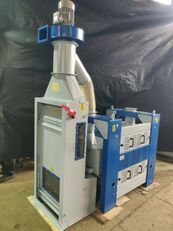
The BSH-12 grain cleaning separator is designed for cleaning grain (wheat, rye, oats, etc.) from impurities that differ from it in geometric dimensions and aerodynamic properties. Separators are installed as part of technological schemes in mills, elevators and cereal processing plants.
Productivity, pre-cleaning, t/hour - 12
Productivity, final cleaning, t/h - 3
Installed power, kW, no more than – 0.75
Overall dimensions of the separator without cyclone, mm, no more:
- length, mm – 1530
- width, mm – 1195
- height, mm – 1440
Design and operation:
Grain cleaning separators consist of the following components: a frame, a body with screen frames, a traverse with a balancing mechanism, a sedimentary chamber, a fan, a fan drive, a pneumatic channel, augers, a feeder, outlet trays, and a fence. The body is suspended from the frame using flexible hangers.
Sieve frames with sieves are inserted into the body along guides attached to the sides of the body and are fixed motionless using clamps. The sieve frames are divided by longitudinal and transverse partitions into cells in which rubber balls are placed, designed to clean the sieves from stuck particles. An electric motor with a drive pulley is installed on the front wall of the sieve body, which, through a V-belt drive, rotates the traverse pulley with an unbalanced load attached to it. A sedimentation chamber with a built-in fan and two augers is installed on top of the frame. The chamber has two channels: 1st channel - primary purge and 2nd channel - secondary purge.
A feeder with a valve that maintains a constant level of grain entering the separator and a built-in magnetic block to capture metal impurities from the product is attached to the front wall of the sedimentary chamber. The pneumatic separation channel is attached to the frame and the sediment chamber and serves to separate light impurities from the grain that differ in aerodynamic properties. The air flow is adjusted using the top valve using a handle. To ensure uniform supply of product to the pneumatic channel, a bottom valve is provided.
The operating principle of the separator is as follows. The product to be cleaned enters the first channel of the sedimentary chamber through the feeder (primary blowing). Thanks to the constant support of grain in the feeder, air ingress beyond the first channel is excluded, which increases the efficiency of cleaning grain from light impurities. Light impurities settled in the sediment chamber of the primary blowing are removed from the machine by a screw. From the primary blowing channel, the grain is directed to the body section. The separator body makes circular movements, under the influence of which the product moves through the sieve and is sorted. Large impurities are removed from the separator through a tray, and a mixture of grain with small impurities, after passing through a sorting sieve, enters the lower frame of the sieves. Small impurities, spilling through the sowing sieve, fall to the bottom of the separator, and then are removed from the machine through a tray.
The grain, cleared of large and small impurities on sieves, enters the pneumatic separating channel. Light impurities are carried away from the grain by an intense air flow - secondary blowing, and settle in the second channel of the sedimentary chamber, after which they are transported from the separator by a second screw. Completely cleaned grain is removed from the machine through the lower collector. Air modes in the first and second channels are regulated by valves installed in the sediment chamber.
The separator can operate in two modes: elevator (preliminary purification of the product) and mill (final purification) depending on the types of sieves used. To clean grain in the separator, sieves with round, oblong or triangular holes can be used, corresponding to the shape and size of the grain of the main crop and the impurities clogging it.
Agrivel is looking for dealers around the world, join us to provide agricultural products and the best solutions for customers!
Agrivel - solutions for farmers worldwide!